
User Tools
Sidebar
niota-docs:grid-editing
This is an old revision of the document!
Table of Contents
Grid edit - user interface
When successfully logged in you are usually linked to the grid editing dialog. How this dialog appears to you depends on how your local niota admin has configured the system. Your local niota admin can configure e.g.
the look and feel
- theme - (color, background image, font)
- language - Englisch/German
- branding - logo, claim
the tables and menue items you have access to
the functions and features you may use.
However your admin configures the system there will be generic feautures which are explained below.
Page layout
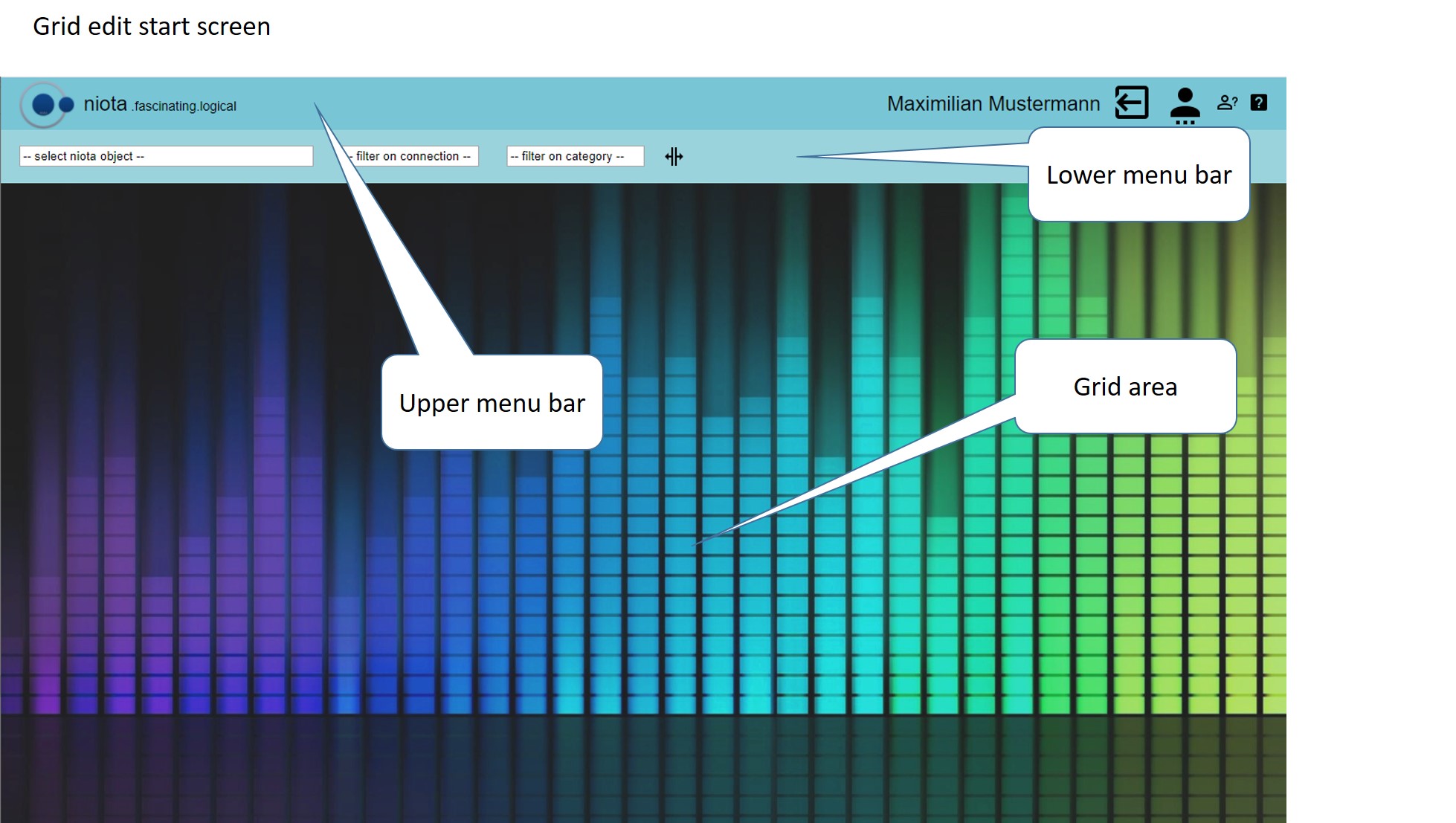
The page can be divided into three sections. From top to bottom:
- Upper menu bar
- Lower menu bar
- Grid area
Upper menu bar
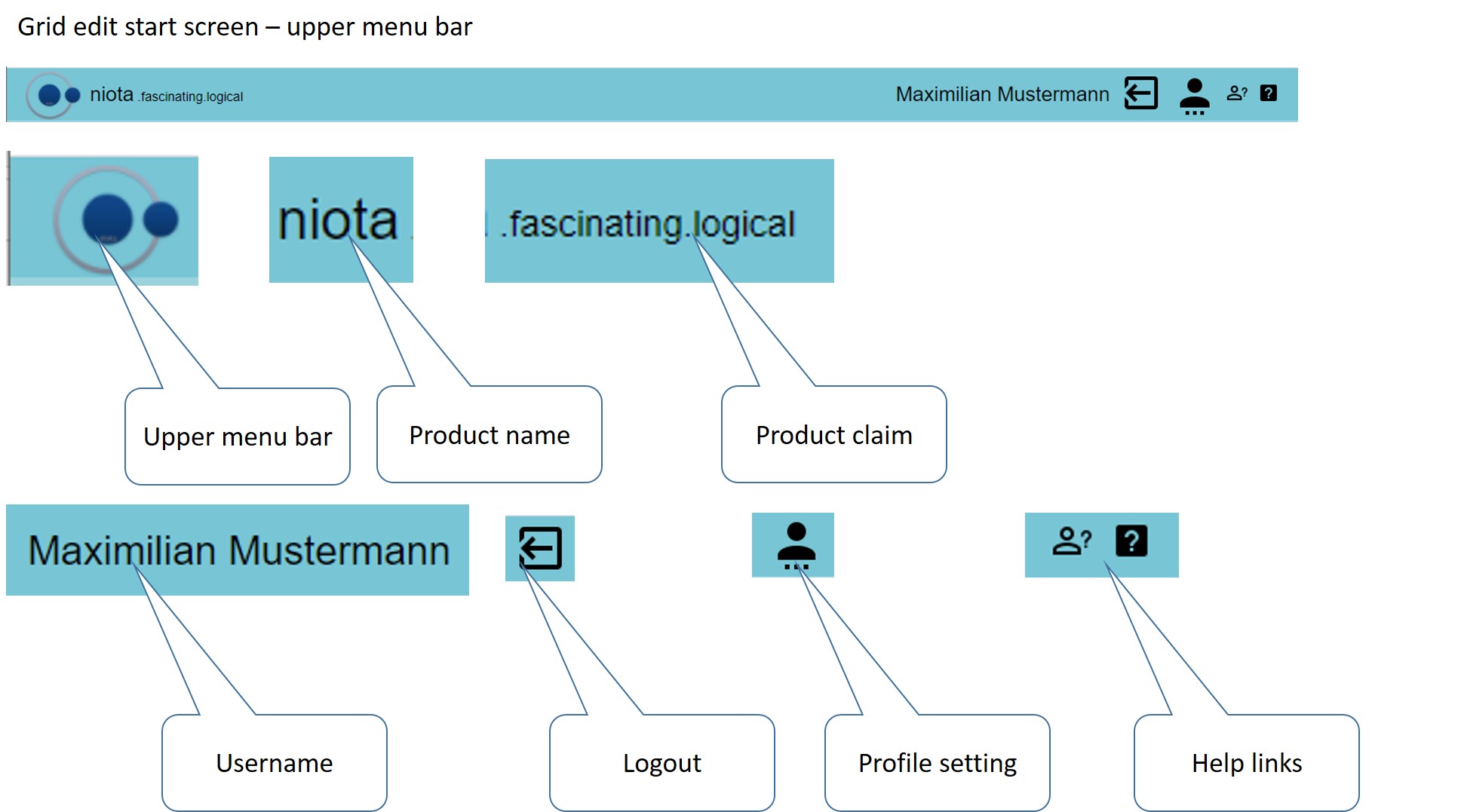
Depending on local configurations and your access rights you find this in the upper menu bar
Upper menu bar clickable icons
 *switch to admin pages*
 *log out*
 *profile settings*
Lower menu bar
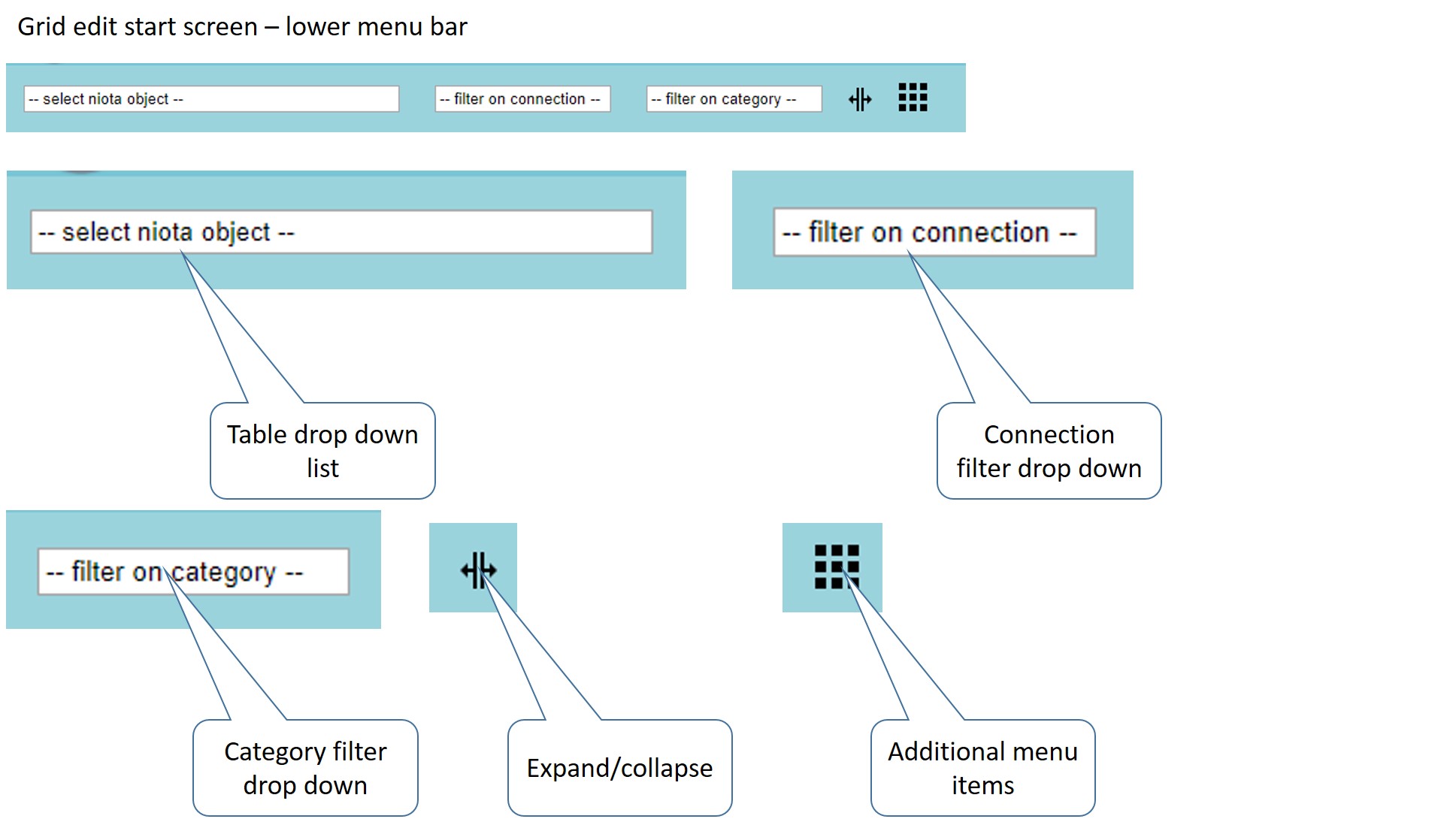
Depending on local configurations and your access rights you find this in the lower menu bar
Grid area
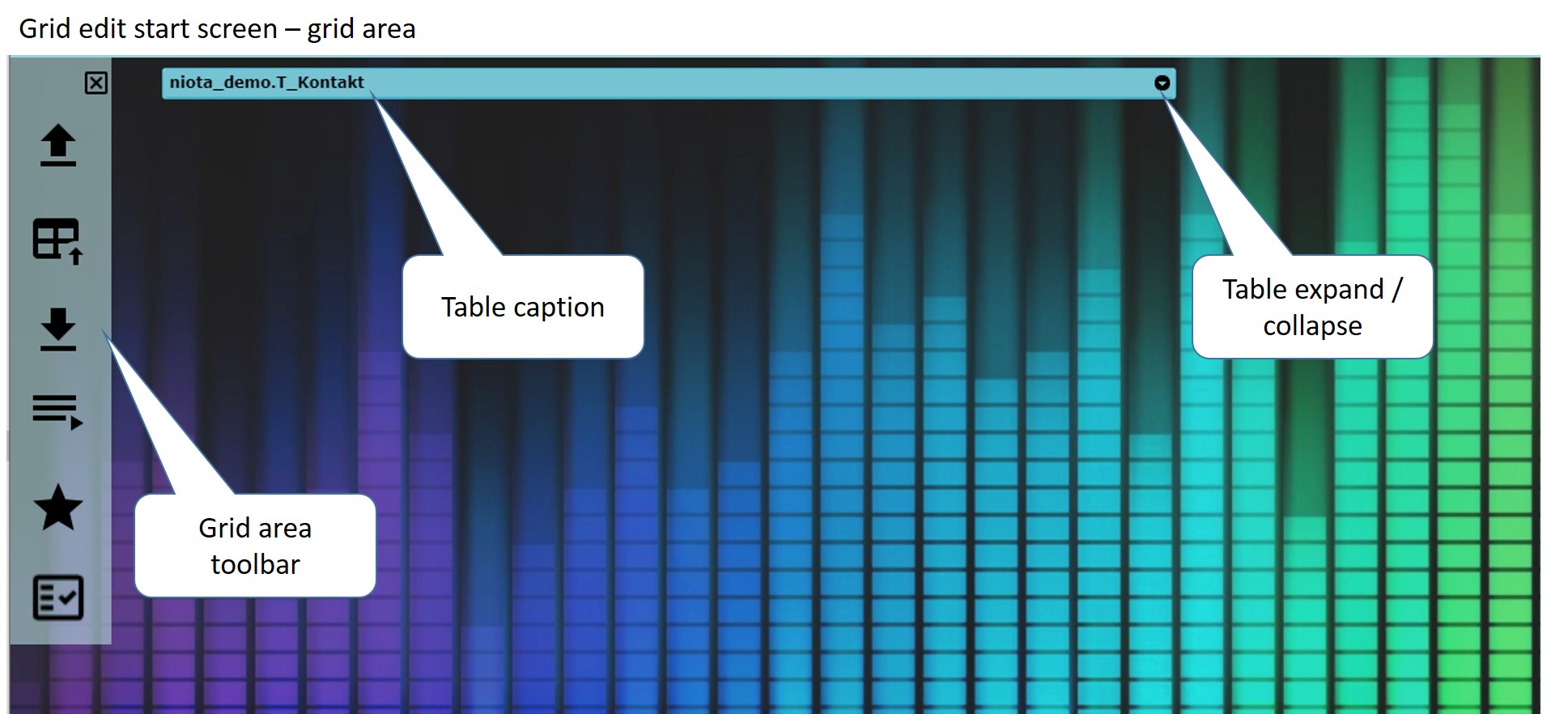
Depending on local configurations and your access rights you find this in the grid area
Menu bars
Lower horizontal menu bar
Displays the followings, from left to right:
- catalog object (grid) selector
- connection filter - only the catalog instances of the selected connection will be displayed in the grid selector
- category filter - only the catalog instances of the selected category will be displayed in the grid selector (to create categories check the related admin feature: #LINK)
 button to hide the three selectors
 transaction menu icon: The transaction menu is a custom menu which has to be configured in the administrative surface (#LINK). Icon appears only when the transaction menu is configured.


Grid and its custom menu
The application's mostly used part. This is where data editing and other related acts happens. You can edit a row by double clicking on it. After selecting a row you can use the icons described below.
Grid toolbar
You can find grid editing toolbar at the bottom of the grid. With additional configuration it can be displayed at the top of the grid too (as you can see on the picture upwards).
 add row: inserts a new row into the grid (and the database table).
 edit row: edit the current row.
 view row: opens the content of the row in a popup
 delete row: deletes the selected row(s)
 reload grid: reloads the grid content
 search: opens the search input on the top of the columns.


Custom menu
This menu bar is set up according to the current user's rights and the settings of the catalog object instance (represented as a grid). It can hold various amount of menu items, but minimum one and maximum six. The menu items can be the followings:
 export: exports the content of the grid into an excel file. In the case of a master - detail setting, the content of the main table will be exported.
 import: imports an excel table into a database table. In the case of a master - detail setting, the content of the main table will be overwritten. Data import overwrites all of the data of the database table!
 callable objects: opens the table of the available callable objects
 favourite table: saves the current grid as favourite. After the next login table will be loaded automatically.
 reset favourite table: clears the favourite table setting. There won't be table load after login.
 advanced filter: loads a filter window for the grid. Details are set in the administrative surface.


niota-docs/grid-editing.1607875290.txt.gz · Last modified: 2025/07/17 14:11 (external edit)